Two products, two fees
Distinction does not charge one blanket percentage for everything. The fee follows what the buyer actually receives, and there are two clear cases. If someone buys a structured course or enrols in an academy, you keep up to 97% of that course sale, with card processing charged separately. If someone buys a file — an ebook, a template, a workbook, or lecture notes — the digital store charges a fee only when the sale happens.
Understanding which model applies is the whole point of this guide, because quoting the wrong number to a buyer is the easiest way to create confusion later. The live plan prices sit on Distinction pricing; here we explain the models behind them.
Course and academy sales
A course is a structured product: lessons, assessments, progress, and enrolment. A buyer pays and then gets access, and the same course can later live inside a branded academy on your own domain, using the same course economics. You create and sell that product from Create and sell online courses, and the step-by-step is in How to create an online course with AI.
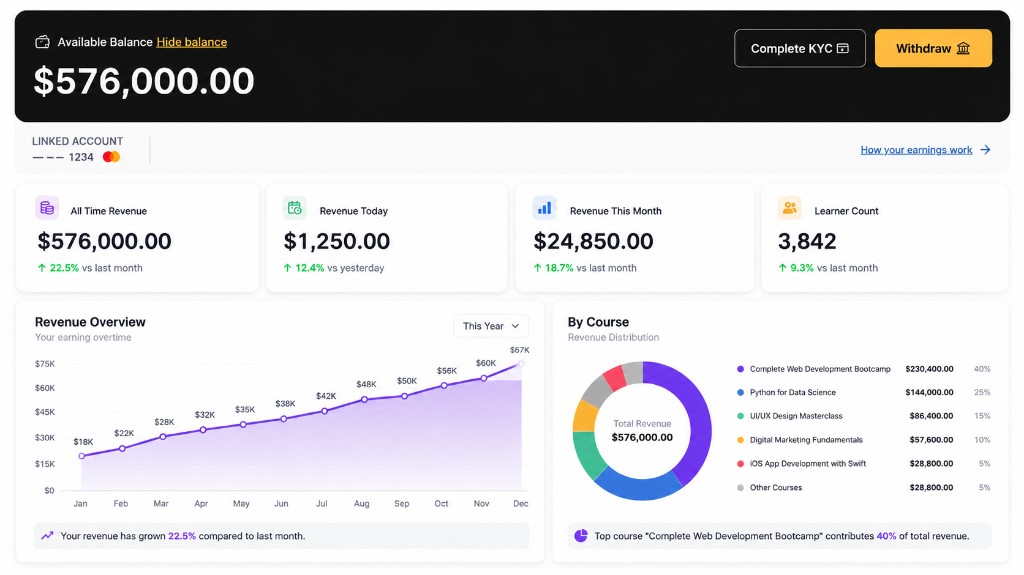
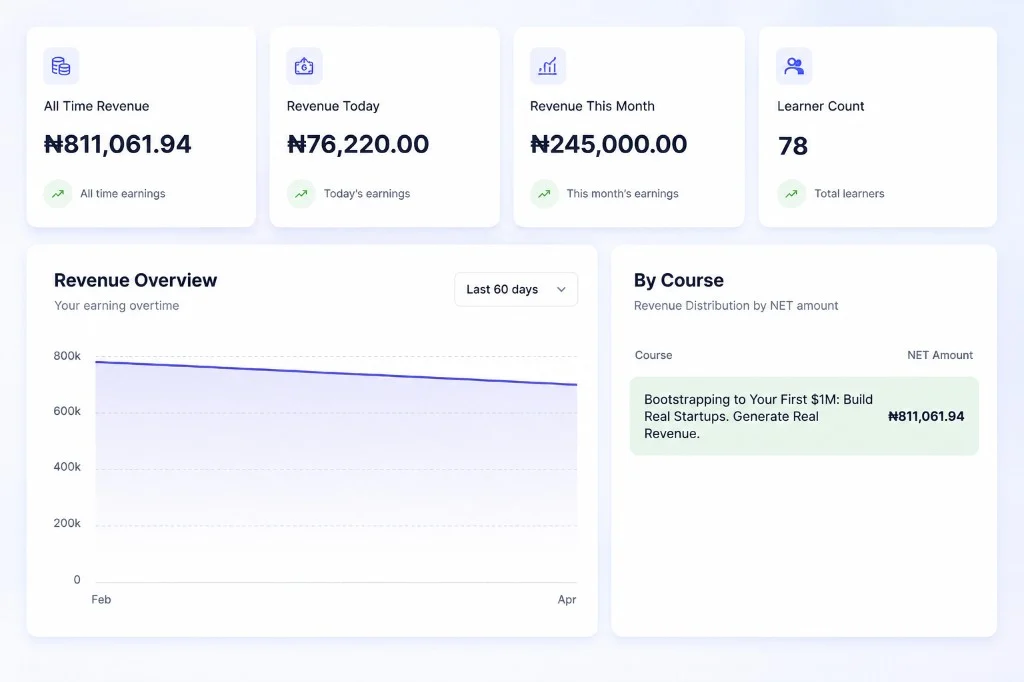
Two details are worth being precise about. First, "keep up to 97%" is the platform's share of a course sale — it is not a promise that your bank receives 97% of the list price, because card networks and local processors still take their own cut. The clearest way to see the real figure is to read the wallet line after a test sale rather than multiplying in a spreadsheet. Second, this course rate does not apply to a standalone PDF, a template pack, or a set of notes; those sit on the store model below.
This is also why pricing a course is a little different from pricing a file. Because you keep the large majority of each sale, a course can be priced for the outcome it delivers rather than to cover a heavy platform cut, and a free introductory lesson can lead into paid modules without eroding your margin. When you set the number, price for the result the learner walks away with, then confirm the split on your first real sale.
Files, notes, and the digital store
A store product is a download with its own landing page and instant delivery. AI can draft the file, its cover, and the sales page on Sell digital products. Lecture notes, past questions, and lab reports use the same store model on the student store: listing is free, and a fee applies only when another student buys.
If you are weighing a course against a file against notes, Should you sell a course, a digital product, or lecture notes? walks through the choice. The guiding idea is simple: one listing, one promise, one fee.
Plans and per-sale fees are separate
The fee on a sale is one thing; the plan you use to run your business is another. Creator pricing is for people selling courses, academy pricing is for a branded school as it grows, and lecturer pricing is for institutional teaching — do not assume the same course rate there unless that page says so.
You move to a higher plan when you need more: additional courses, academy features, or institutional seats. The per-sale fee still follows the product. A creator plan does not turn a PDF into a course sale, and an academy plan does not turn lecture notes into an enrolment.
How to know which number to quote
- Write one sentence describing what the buyer receives after they pay.
- If that sentence includes modules, progress, and an assessment, it is a course: keep up to 97%, processing separate.
- If it is an ebook, guide, template, or workbook, it is a store product: a fee only when it sells.
- If it is notes tied to a course code, use the student store — the same store model.
- If it is a ticket or a physical item, Distinction is not the right platform for that sale.
- Open Distinction pricing for current plans, and creator, academy, or lecturer pricing for your role.
- Read How payouts work before you promise a withdrawal date.
- If you sell more than one kind of product, keep a separate listing and a separate fee sentence for each.
Comparing other platforms
Distinction is not priced like a marketing suite, an enterprise LMS, or a tax-remittance product — those are different tools with different economics. When you need a competitor figure, the side-by-side fee columns live on Distinction vs Teachable, Distinction vs Kajabi, and Distinction vs LearnWorlds. Use those tables for the numbers, and use this article to settle the more important question first: is your listing a course or a file?
Frequently asked questions
Why are there two numbers?
Because courses and files are different products. Collapsing them into one take-rate misleads buyers.
How does the store fee work?
Listing is free. A fee applies only when someone buys a file. Course keep (up to 97%) does not apply to ebooks or notes.